CONTINUOUS MATERIALIZATION

Move work from request time to change time.

Continuous Materialization processes source changes as they happen and keeps delivery-ready state up to date. Consumers read that state directly instead of rebuilding it from source systems for every request.

visual concept of the continuous materialisation

HOW IT WORKS

Follow a change through the mesh.

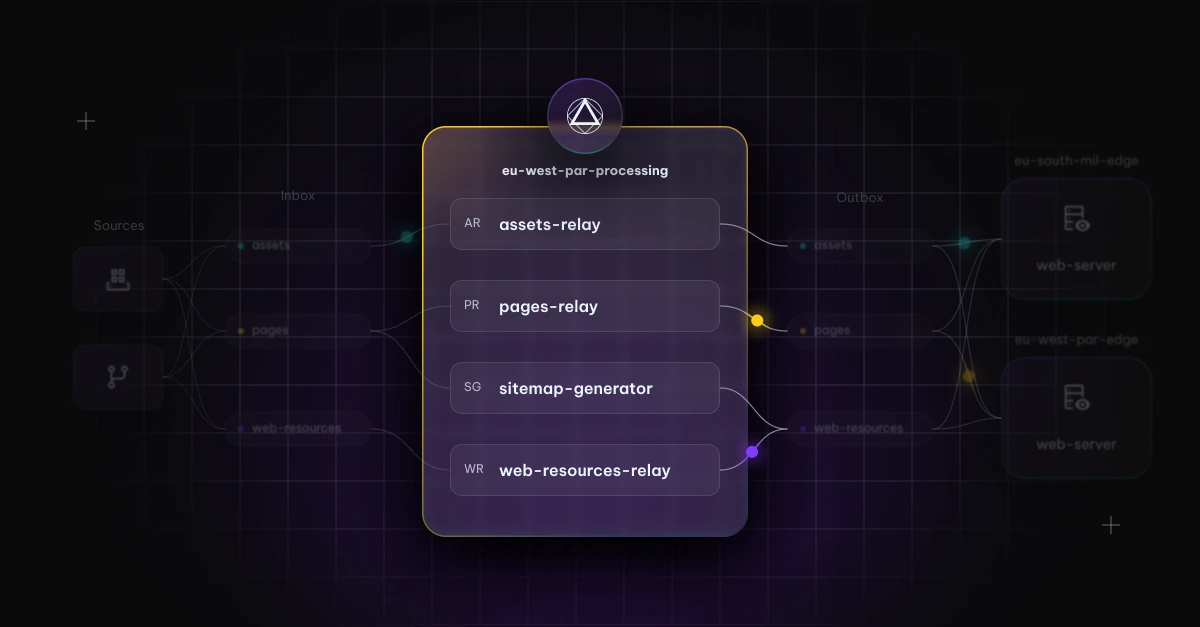
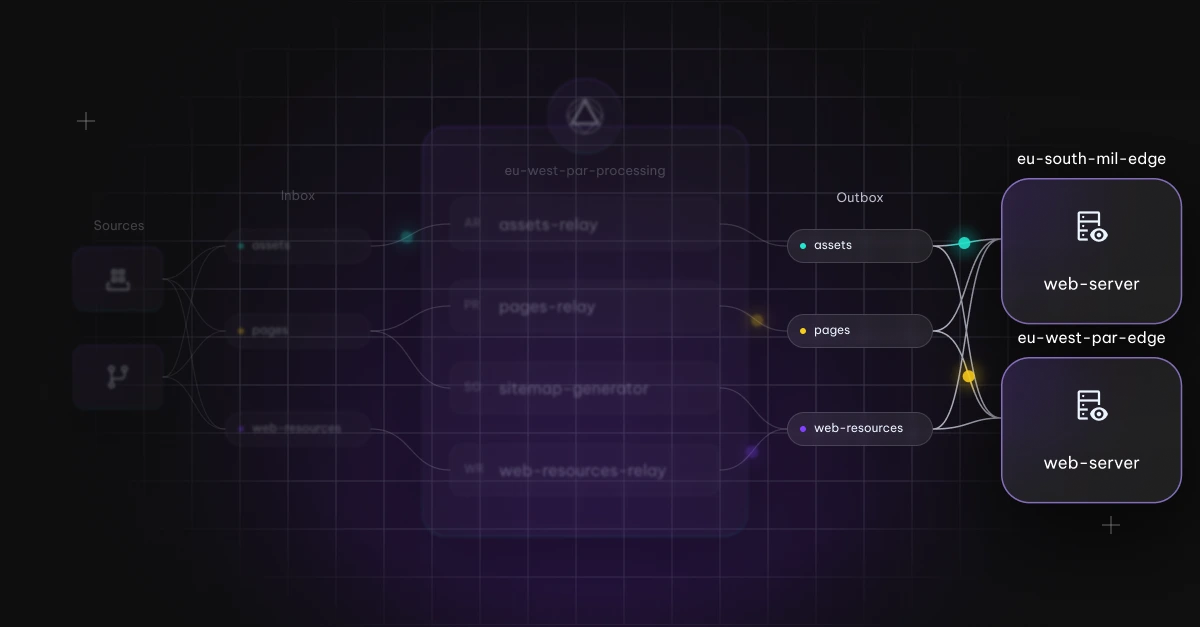
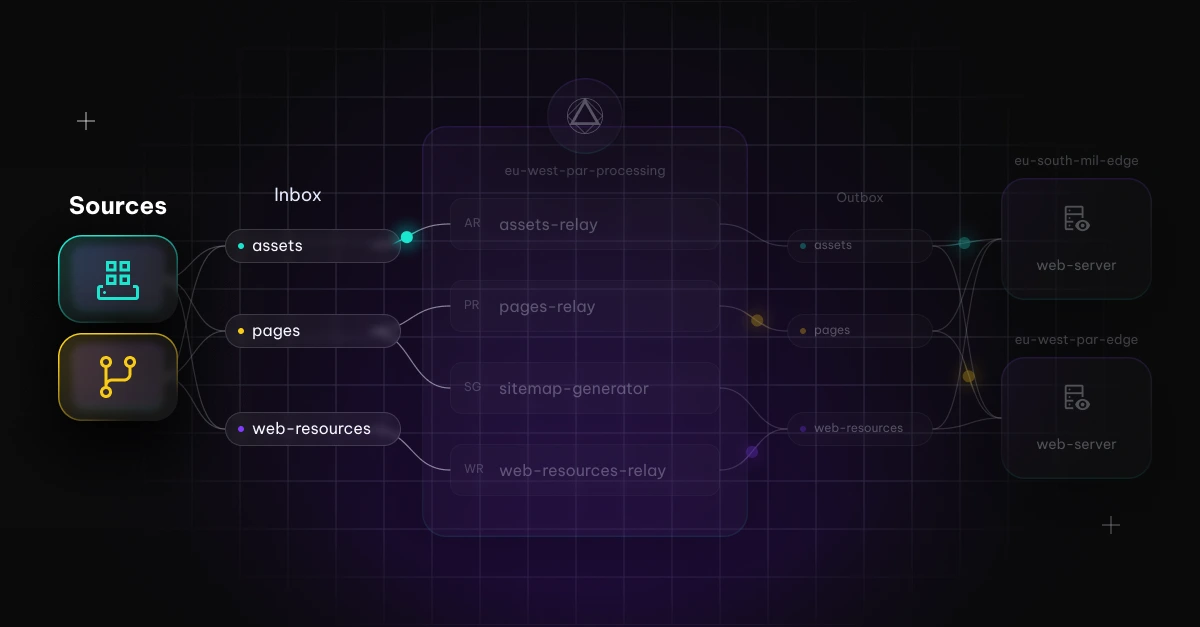
Source systems publish changes. Services process them and maintain state. Delivery services expose the resulting view to consumers.

  • Source

  • Processing

  • Delivery

local state icon

LOCAL STATE

Services maintain the state they need

Each service can keep local state for its processing. When data changes, downstream services use their own state to update the materialized result, without fetching all the source data again.

At the edge, delivery services can maintain materialized state in memory, a database, or a filesystem and use it to handle requests.

In memory Database Filesystem
message icon

CONTRACTS AND CHANNELS

Message contracts connect sources and services

Sources and services communicate through defined message contracts and channels. Each service subscribes to the channels it needs, so producers do not need direct integrations with every downstream service.

New sources and services can join the flow without connecting each one to every consumer. Contracts and channels also make dependencies and data flows explicit across the mesh.

THE REQUEST PATH

Do the work ahead of request.

The change itself triggers the work needed to keep the result current. The request path can then stay focused on serving what is ready.

AT CHANGE TIME

Process, derive, distribute.

Use source changes to update the affected pages, search documents, feeds, or other delivery resources.

AT REQUEST TIME

Read what is ready.

Serve materialised state directly and perform only the work that truly depends on the current request.

WHAT GETS MATERIALIZED

Materialize content and API data

Materialization describes when and how data is prepared, not how it must be served.

static content icon

Content

A complete page or reusable fragment can be prepared as source content changes.

Page Fragment
dynamic data icon

Data for dynamic API

Data maintained for an API that answers per user or per query.

Personal recommendation Search result

Materialization describes when and how data is prepared, not how it must be served.

Operations that depend on current transactional state can still go directly to the system that owns it.

OUTCOMES

What changes in the architecture

reliability icon

Reliability

Fewer runtime dependencies

Serving a request does not require every contributing source system to be online.

Better failure isolation

If a source goes down, updates from it pause. The last successfully materialized result can remain available until updates resume.

performance icon

Performance and scale

Lower request latency

Most processing is completed before a request arrives.

Independent scaling

Change processing and request serving can scale according to their own workloads.

Global delivery

Materialized results can be replicated close to users without sending every request back to the original sources.

architecture icon

Flexibility and structure

Easier system evolution

Teams can add sources or processing services without changing every consumer.

Clearer separation of concerns

If a source goes down, updates from it pause. The last successfully materialized result can remain available until updates resume.

security icon

Security

Smaller public attack surface

Source systems can stay private. Public requests only read prepared state and never query or write to sources directly.

Controlled data exposure

Message contracts define which data leaves each source, so sensitive fields are not propagated toward delivery by default.

ADOPTION

Introduce it incrementally

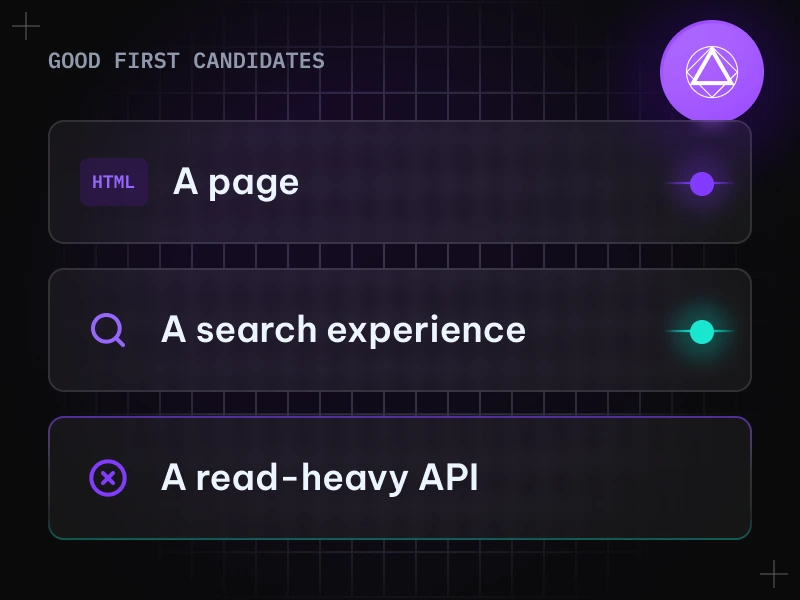
Introduce Continuous Materialization alongside existing systems. Begin with a page, search experience, or read-heavy API where preparing data ahead of time removes work and dependencies from the request path.

Keep live request processing where it makes sense. Materialize the parts that benefit from being prepared in advance.

good candidates for a pilot visual representation

FAQs

Common questions

  • No.

    It moves work that can be completed when source data changes. Work that depends on the current user, authorization, or transactional state can still happen when a request arrives.

  • Processing begins as source changes are published. How quickly the result reaches delivery depends on the source, processing flow, and distribution setup. The pattern does not by itself guarantee synchronous updates.

  • It cannot provide new changes while it is offline, so its materialized state stops updating. The last successfully materialized result can remain available until updates resume.

  • No.

    Continuous Materialization can sit alongside existing systems. Start with a page, search experience, or read-heavy API, and keep request-time processing for operations that need current state.

See Continuous Materialization in practice.

StreamX is a Continuous Materialization Platform. It connects source systems, processing services, and delivery services in a mesh.